
B2B Marketing Newsletter

Random Acts of Marketing: Ed.5, November 2026

Period:
Oct - Nov 2026
Author:
River Milnes, MBA
Published
November 25, 2026

In this edition

  • The Read: Rates are up, orders are down, and the squeeze has spread from the factory floor to services.
  • The Opportunities: Three project decisions where the money moved before the headline.
  • Notes from the Field: Firms that lead with their own story leave no room for the needs of the market. Here's the four-step fix.
01

The Read

November's numbers point one way: dearer money, dearer inputs and thinner order books. Here is what that combination means for your sales pipeline.

Orders fell again.

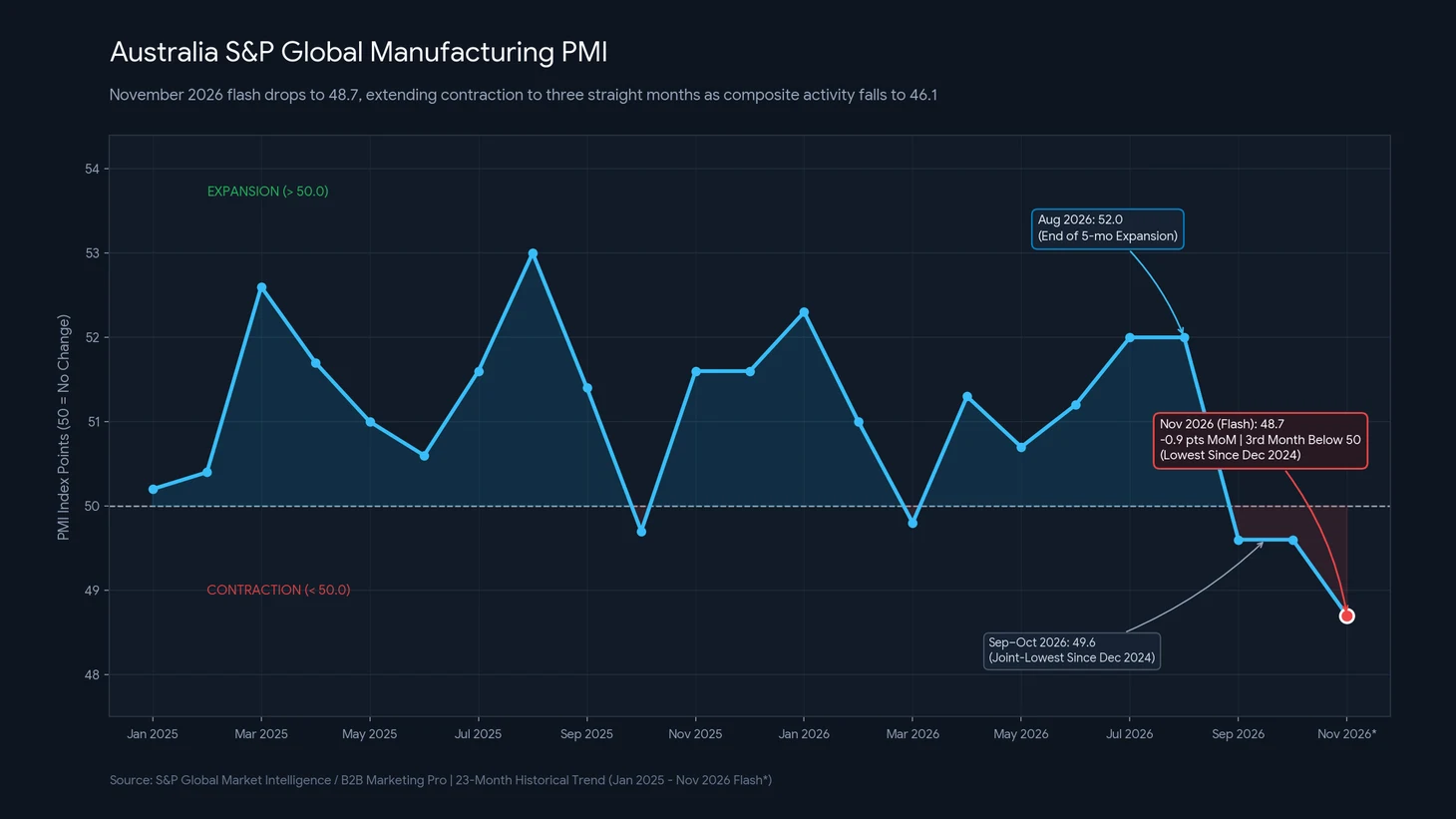
The S&P Global Australia Manufacturing PMI held at 49.6 in October, the joint-lowest reading since December 2024 and a second straight month below the 50-point line. New orders fell at the fastest pace in almost two years. Firms named rising prices, higher interest rates and weaker underlying demand as the reasons.

Monday's flash reading for November dropped to 48.7. The bigger tell is the composite index, which fell to 46.1, its lowest since August 2021, because new business in the services sector has joined the declining manufacturing market.

For operators in those sectors, it means the slowdown has spread well beyond the factory floor. When your buyers' customers stop ordering, discretionary spend on equipment, upgrades and outside services is usually pushed into the next financial year.

Costs and prices rose together.

Weaker demand is only half the picture. October's survey also showed input cost inflation intensifying across energy, raw materials, fuel and shipping. Delivery times are also stretching at one of the fastest rates since mid-2022. Naturally, manufacturers are responding by lifting prices to pass the costs on.

The ABS numbers tell the same story. Annual CPI rose to 4.3 per cent in September, with automotive fuel up 9.4 per cent on higher world oil prices. The trimmed mean rose 1.0 per cent for the September quarter, above the 0.8 per cent the RBA had forecast in August.

If you follow the daily press, much of the blame lands on government spending. Yet the RBA's own November statement points elsewhere: global fuel shocks, AI-driven equipment costs and domestic capacity bottlenecks. In concentrated Australian markets, large corporates protect shareholder margins by pushing prices up even as volumes soften, leaving smaller suppliers to absorb the squeeze or price themselves out.

A split board delivered the fifth hike.

Borrowing costs rose too. On 3 November, the Reserve Bank lifted the cash rate 25 basis points to 4.85 per cent, the highest level since late 2008 and its fifth increase of 2026. The vote was six to three, meaning a third of the Monetary Policy Board wanted to hold. That split matters: three members saw little case for tightening further when domestic demand is already softening, and price pressure is coming from fuel, energy and shipping.

Even so, the majority expects inflation to stay above 3 per cent for the coming year and not reach the top of its target band until late 2027, around three quarters later than it forecast in August. For your buyers, a divided central bank offers no timeline for rate relief, leaving CFOs reluctant to sign off on debt-funded equipment or plant upgrades.

Jobs follow orders.

Staffing lags behind order books by a month or two, because plant managers cut overtime and work through backlogs before letting permanent staff go.

That lag is now showing up in the official figures. ABS data released in November showed seasonally adjusted unemployment climbing to 4.9 per cent in October, its highest level since October 2021, with 43,500 fewer people employed.

The ABS advises caution around single-month swings because survey sample rotation can add short-term noise, yet its smoothed trend rate also rose to 4.8 per cent, confirming that the underlying labour market is loosening.

Five years ago it took state-wide lockdowns to push joblessness that high. Today, tighter credit and thinning order books are doing it on their own.

The world keeps building.

Conversely, the global picture is stronger. The J.P.Morgan Global Manufacturing PMI posted 52.6 in October, its fifteenth straight month of expansion, with factory backlogs rising for a ninth month. Australia sat near the bottom of the 29-nation output ranking.

The RBA itself noted that growth in Australia's major trading partners has been stronger than expected, as AI-related investment outweighed the drag of the Middle East conflict.

So when we boil this all down, the fundamental weakness is domestic. Demand still exists, but it sits in opportunities outside the nation.
02

The Opportunities

The Opportunities

When domestic demand contracts, cash consolidates in funded, non-discretionary work. The job is to find who holds it and follow the money. Below I've listed three projects that have advanced since the last edition. In each case, the funding was locked in well before it made the news.

PLS's Pilgangoora P2000 engineering is already moving.

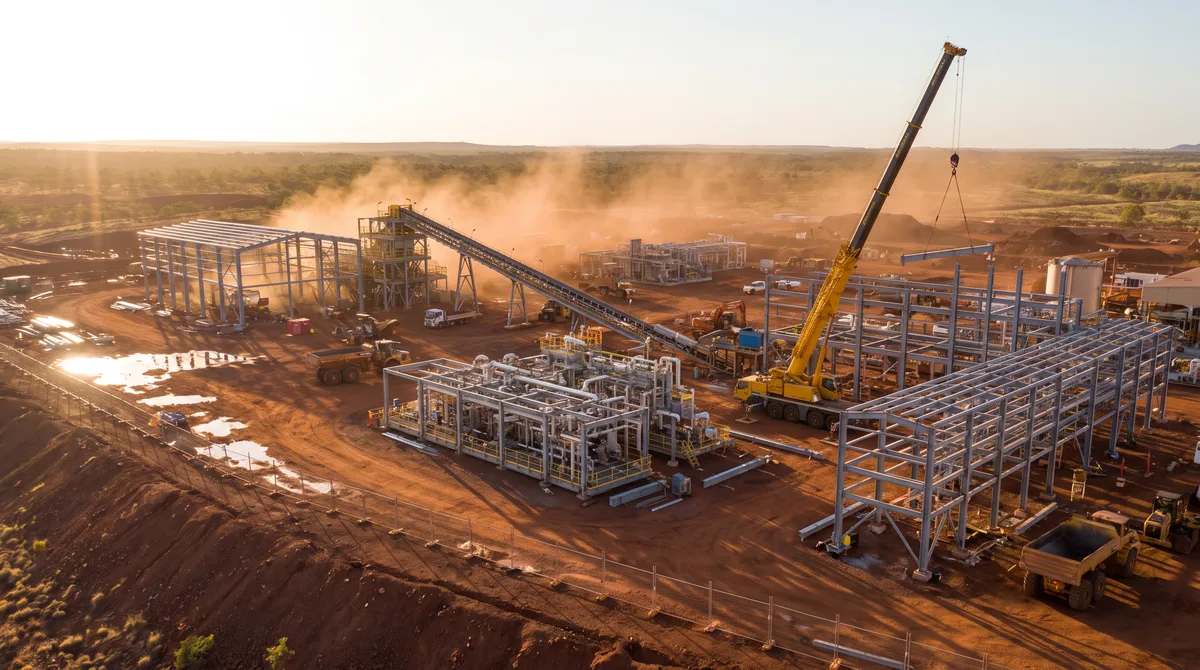
On 16 October, PLS took a final investment decision on its roughly A$1.9 billion P2000 project, lifting Pilgangoora to about 2 million tonnes a year of spodumene concentrate (used to produce lithium compounds) through a new processing plant named Jimmagunya. First production is expected in the September quarter of 2029, funded from existing cash (A$2.3 billion at 30 June) and operating cash flow.

Two lines in the announcement have interesting implications. First, previously approved pre-FID spending was already funding engineering, procurement and other activities to hold the schedule. Second, Jimmagunya will use a highly modularised construction strategy, maximising off-site fabrication and pre-assembly.

Put simply, part of this work will be built in fabrication yards and assembly shops away from the Pilbara region, and the engineering behind it was moving before the FID went public. If you fabricate, assemble, or integrate process modules, you'd do well to talk with whoever holds the engineering and procurement scopes, and many of those conversations are happening right now.

Grange's North Pit Underground schedule leaves a window.

On 14 October, Grange approved its North Pit Underground project in north-west Tasmania. It's A$287 million in underground capital, funded from cash, with environmental approvals in place. The board picked a sub-level cave over the larger block cave, because weaker iron ore prices, rising costs and a lower appetite for risk meant the block cave couldn't be funded at the scale it needed.

The timeline is the useful part. The underground mining contract is awarded and mobilised in the December quarter of 2026. Development starts in the March quarter of 2027, front-end engineering design wraps up in the first half of 2027, and first ore is due in 2028.

Front-end engineering runs until mid-2027, so the packages that follow it are still being scoped. That's your window.

BHP's Copper South Australia programme is moving before the FIDs.

On 23 November, BHP told investors it plans to grow Copper South Australia to around 500,000 tonnes of copper a year by 2035 and up to 650,000 tonnes by 2040.

The plan arrives as a staged run of FIDs:

  • the smelter and refinery expansion (US$3.2 to 4.1 billion) in the second half of 2027
  • the Carrapateena block cave expansion (US$1.8 to 2.1 billion) in the first half of 2028, and
  • the Olympic Dam mine and concentrator growth project in 2029.
  • The government-led Northern Water project, with BHP as a foundation customer, is scheduled for its own FID in 2027.

Last month, Havieron announced a contract after engineering had started. BHP shows the same pattern from the other end: the programme is public years before the FIDs, and US$366 million in pre-commitment funding is already approved for mine development and enabling infrastructure at Carrapateena.

Specs get written well before the board signs. A supplier who treats a 2027 or 2028 FID as the starting gun is running a losing race.

Find the scope holder before vendor lists close.

Across these examples, the pattern from Ed.4 holds. The money is committed, the engineering is moving, and the vendor lists form well ahead of any public tender. The practical move is to work out who holds the engineering and procurement scope on the projects that fit your capability, then make sure your technical pages, case studies and trade press presence prove that capability now most definitely before any of your BDMs undertake outreach.

03

SME Opportunities

SME Opportunities

If you run a mid-market industrial, engineering, technology or commercial construction firm, a 4.85 per cent cash rate and falling domestic orders make chasing discretionary private work an expensive way to fill a revenue pipeline. Three pockets of funded demand stand out this month.

1. Module buyers need schedule certainty.

PLS's modular strategy for Jimmagunya is designed to move work off site and simplify installation and commissioning. That only pays off if the yards deliver to schedule, so schedule certainty is what the buyer is purchasing.

Pitch execution certainty to the engineering and procurement teams: "We deliver pre-assembled, tested modules on a fixed schedule, so your site crew installs rather than builds." The buyer is likely to listen now because modules must be built before site installation can start, so those orders sit near the front of the programme.

2. Staged scopes fit constrained budgets.

Grange's board picked the lower-capital option because the bigger one could not be funded at scale in this market. With rates at 4.85 per cent, expect more owners to make the same trade: smaller first stages, options kept open, spend matched to cash flow.

If your pitch needs a large upfront capital approval, expect deferrals. If your pitch is "We can deliver stage one inside your existing budget and approvals, and keep stage two as an option," the project director has a reason to say yes this financial year.

3. Data centre infrastructure creates a local opening.

An RBA analysis published on 9 November found data centre investment in Australia has grown around tenfold over three years, with staff forecasting it to reach around 2 per cent of GDP by the end of 2028. The catch for local suppliers: about three-quarters of the cost is fit-out equipment, largely imported. Construction of the building is about a quarter, and the investment also drives spending on supporting infrastructure, including electricity.

The servers arrive from overseas. The building, the power connection and the services around them are built here. For electrical, mechanical, structural and civil firms, that is the local share, and the RBA's own business investment forecast leans on it. Pitch to developers and their head contractors on delivery capacity and power-ready timelines.

04

Notes from the Field

Notes from the Field

If the money moves before the headline, what happens when a PLS package engineer or a BHP procurement lead asks an AI tool who can solve a specific problem?

Usually, they don't need to ask; most buyers go back to suppliers they know. Yet, when a supplier drops the ball or a scope has a gap, the question goes to an AI answer engine, shaped as a problem: "Who can deliver tested process modules on a fixed schedule?"

What the tool returns depends on what your website (and overall digital footprint) gives it to match.

1. The buyer's problem gets forgotten.

When I reviewed a batch of industrial websites in a recent desktop-audit pilot, the surface design issues were easy to spot: weak hero banners, dated layouts and unclear calls to action. Looking closer at the copy, however, revealed a much bigger commercial gap. Page after page talked at length about the supplier - its history, its equipment list and its mission statement - while barely mentioning the operational problems a buyer actually needs solved.

That gap directly affects whether you show up when a buyer uses an AI tool to shortlist suppliers. An engineer dealing with schedule risk asks the tool who can deliver tested process modules on a fixed schedule without blowing out site installation. An AI answer engine scans supplier websites looking for clear, specific evidence that a firm has solved that exact problem before.

Put simply, if your website only talks about who you are, the tool has very little to connect your capability to the task the buyer needs done. The engineer asked about schedule risk, and your site answered with twenty years in business and a generic list of capabilities. When that happens, the AI tool passes over your firm and recommends a competitor whose pages state the buyer's problem and show how they fix it.

2. Four steps put the buyer first.

The fix is a simple model that starts small. Pick no more than three core problems your product or service solves, then work through each one in this order:

  1. Problem: write down the problem you solve, in the buyer's words.
  2. Implication: write down the most likely future for the buyer if that problem stays in place. This is where you sell the pain.
  3. Solution: state concisely and clearly how you solve it.
  4. Proof: back it with case studies, testimonials, references and certifications.

A module fabricator can make the sequence concrete.

Here is how the four steps might read for an illustrative module fabricator chasing work like the Jimmagunya build. The sequence connects the operational problem to its commercial cost before asking the reader to assess the solution.

  1. Problem: modules arrive late or incomplete, so site crews end up building what should have been installed.
  2. Implication: each week of slippage pushes commissioning back, burns remote-site labour and puts the first production date at risk.
  3. Solution: pre-assembled, tested modules delivered to a fixed schedule.
  4. Proof: a dated case study with on-time delivery records, a client reference and the relevant welding and quality certifications.

Write those three problems well, and you give both the AI tool and the engineer reading its answer something specific to match.
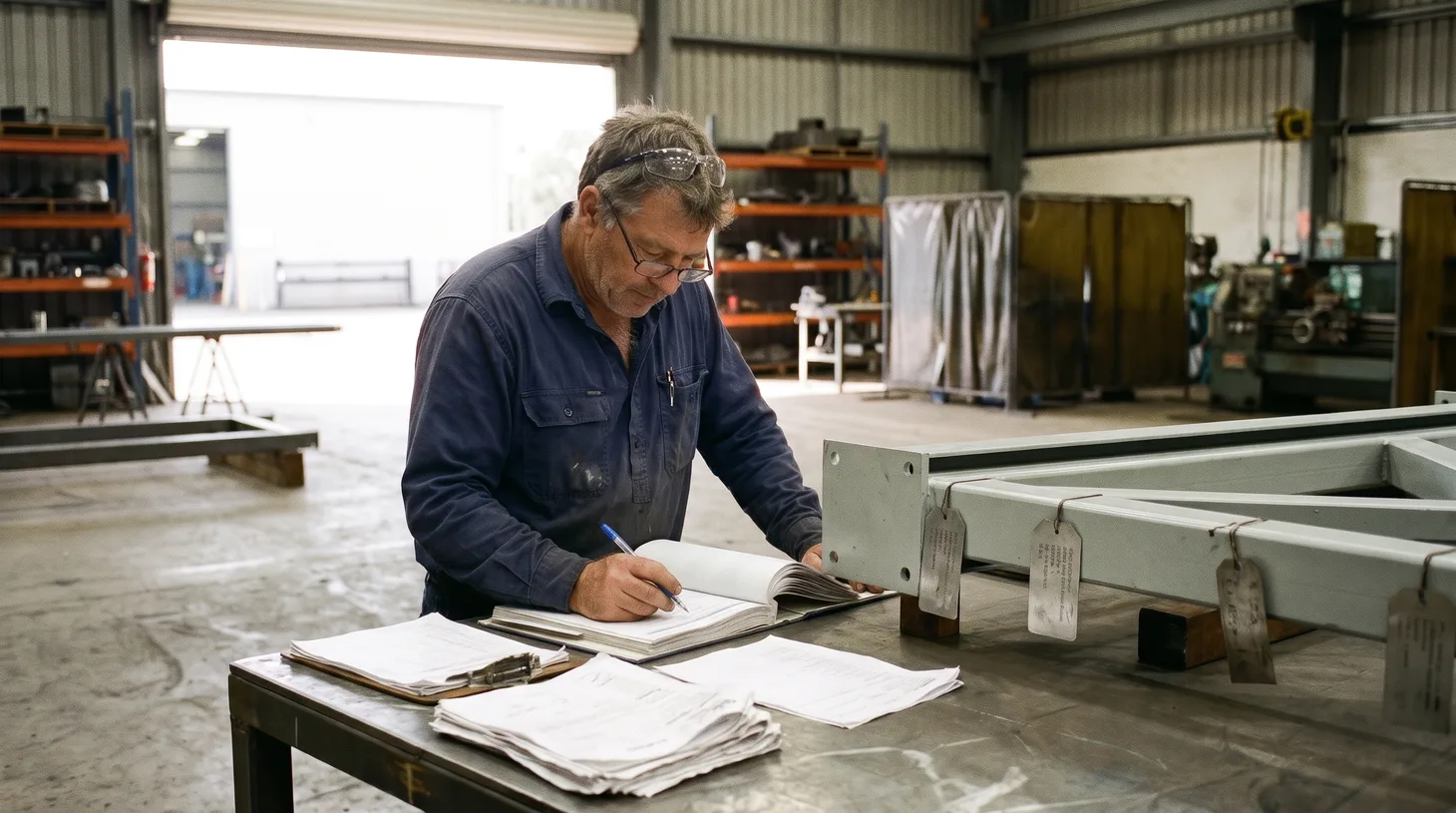

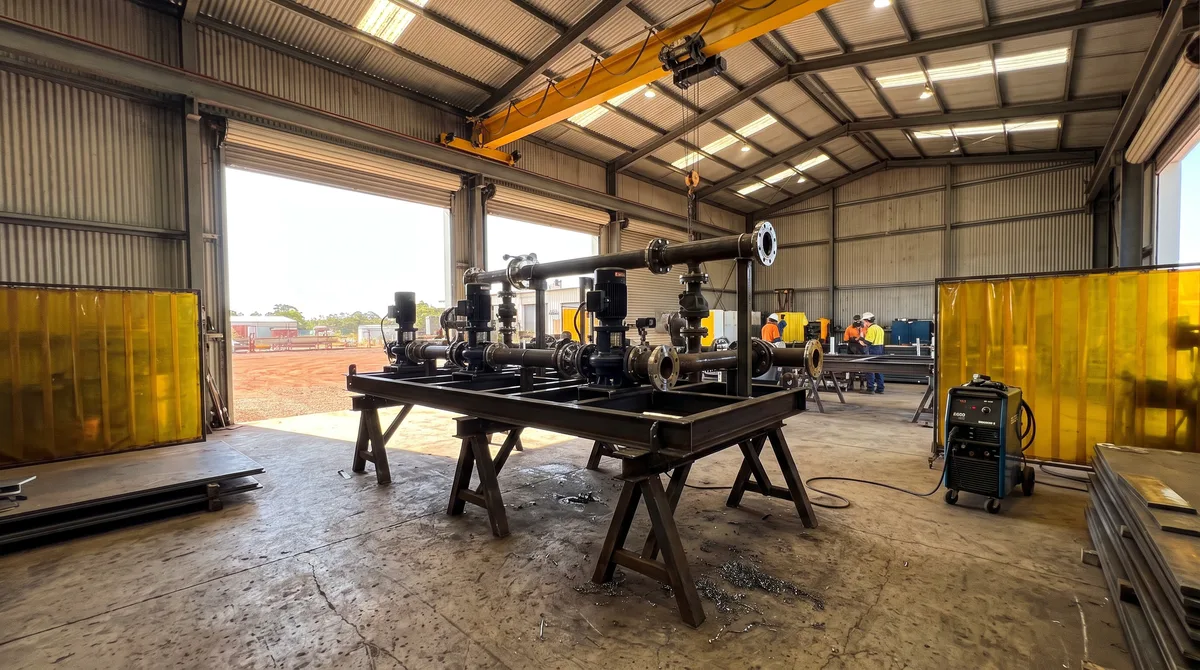
Fabrication supervisor checking paperwork beside tagged steel frames in a workshop
05

Final Word

Final Word

November leaves Australian industrial leaders facing a sharper version of October's two-speed market.

On one side, domestic demand is contracting under a 4.85 per cent cash rate, rising input costs and the steepest drop in new orders in almost two years, with the slowdown now spreading into services. On the other side, major capital keeps moving into lithium, iron ore and copper.

That money is committed through engineering and procurement well before the public headline, and project teams, along with the AI tools they use, shortlist suppliers based on what they can verify online.

That divide will separate industrial firms into two camps over the coming year:

  • One group will keep pricing off stale cost bases, wait for public tenders to appear and wonder why their order book thins out through 2027.
  • The other group will reprice bids for today's costs, name the operational problems they solve, show what those problems cost the buyer and prove the fix, so project teams and answer engines can match them to packages while the scope is still being written.
CP03: Cut Through Noise
All industries

AI search visibility for business: folklore and evidence

Click to view

More editions

Monthly

Subscribe to newsletter

Thank you! Your submission has been received!
Oops! Something went wrong while submitting the form.