
On this page, you'll find a growing library of B2B marketing insights and musings I've gathered over years.
If you're in mining, manufacturing, engineering, industrial technology, or allied industries, these articles are written for you. I've done my best to strip out the agency and corporate jargon and instead utilised diagnostic and helpful perspectives.
What if your marketing problem is really a commercial system problem?

Seven symptoms, one upstream cause. Most industrial firms treat slow pipelines and weak enquiry as a marketing problem, so they fix the wrong thing.
The real issue is commercial architecture. Here's what that failure looks like, and where it starts.

Planning an industrial website redesign? Many firms don't actually have a design problem, they have a positioning gap.
Run this 5-question diagnostic to determine whether you need a cosmetic refresh or a commercial rewire before rebuilding.
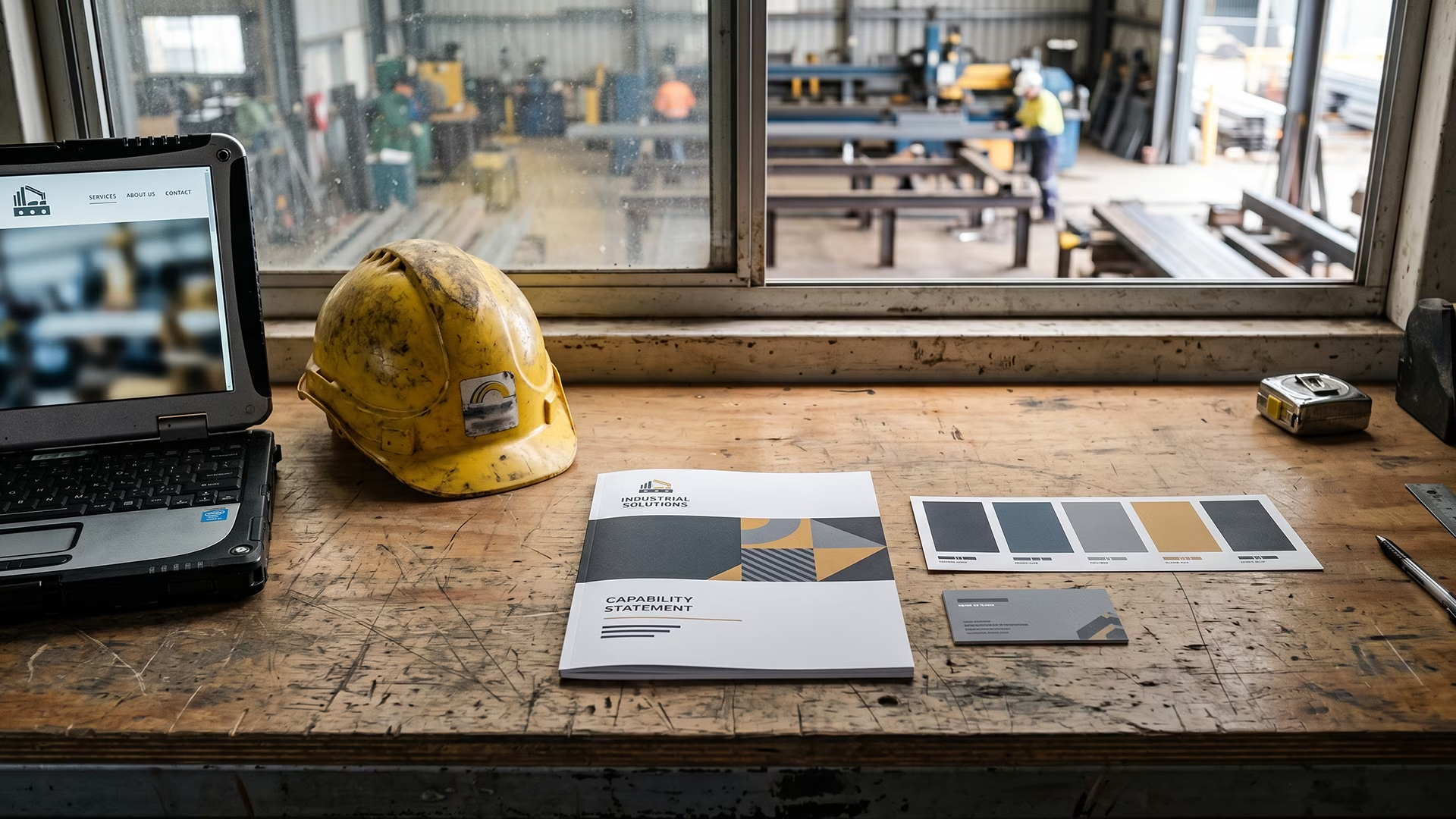
The industrial rebrand checklist for B2B firms. Six diagnostic questions to run before briefing an agency, the refresh-versus-rewire decision that determines the spend, and the five hidden players who quietly decide whether the project sticks.
Are you struggling to win the tenders that will elevate you to the next tier?

Proposal evaluators use capability statements as evidence filters, not information sources. For industrial tech suppliers, the difference between a document that gets you shortlisted and one that's set aside is the quality of the proof behind the claims.
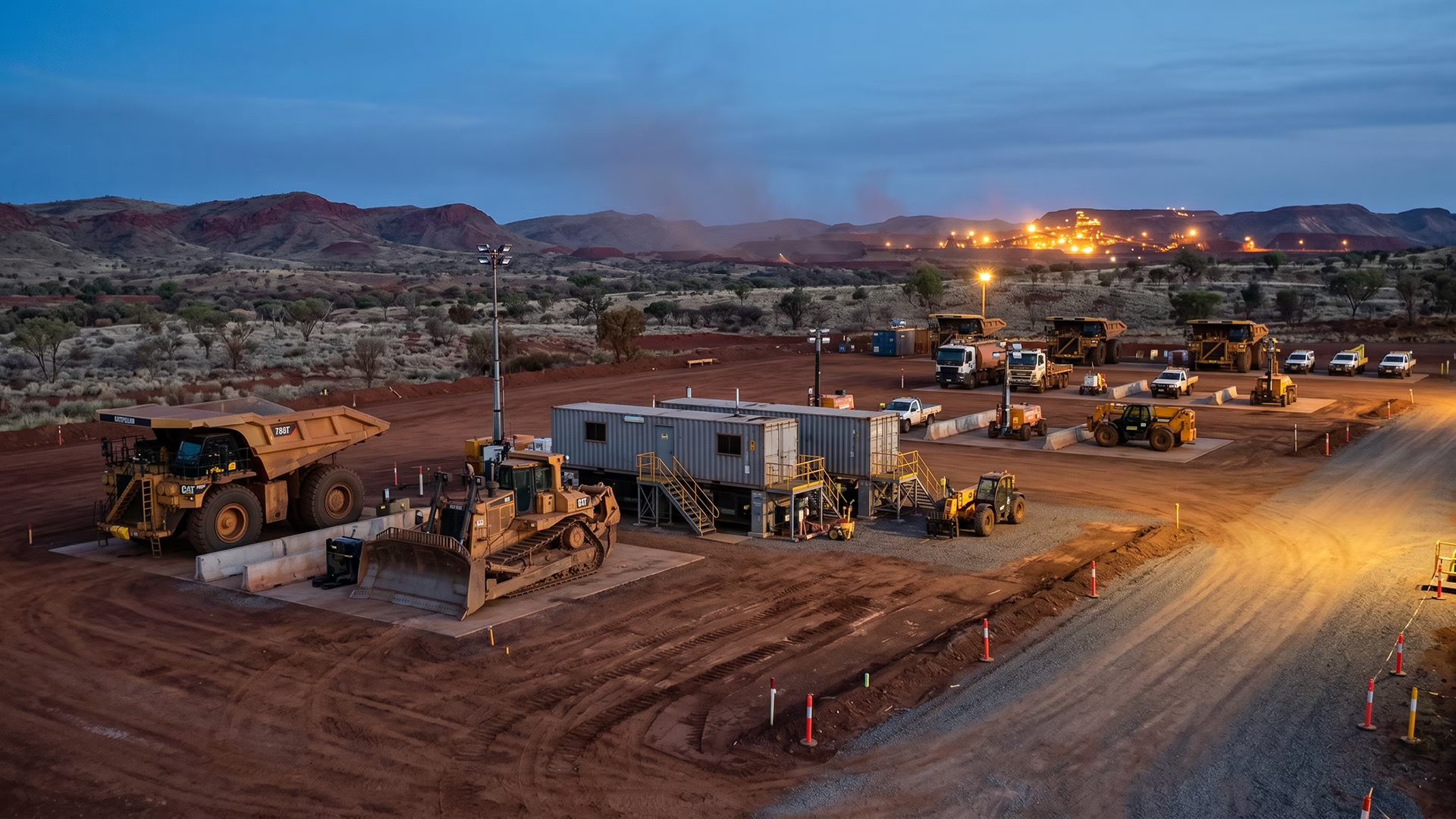
This simple practitioner's guide is designed for mining service contractors who want to gain more traction with their tender submissions.
It covers the drivers behind the procurement shortlist, which channels move the needle, and what to build before you run any campaigns.

To win more tender shortlist opportunities, mining capability statements need to do more than list services and certifications. The strongest documents lead with positioning, not specs.
Here's how a sharper capability statement helps METS firms get shortlisted for Tier 1 work.
Why are weaker competitors winning the deals you should be closing on?

Marketing an Industrial Internet of Everything (IIoT) platform fails when engineering depth never reaches the buyer's level of understanding.
The issue is not the technology. It is how the technology is positioned in the buyer's mind.
Does your capability statement survive procurement filtering?

Trade media coverage and credibility is a third-party verification layer procurement uses whether your firm intended it as a marketing channel or not. When a buyer Googles your name and the only result is your own website, there is nothing independent to validate the claim.

Business credibility signals across your website, capability statement, LinkedIn, and supplier portal rarely tell the same story. Procurement defaults to the lowest signal, not the strongest. The fix is system coherence, not a single-asset redesign.
Is your CRM full of potentials that never seem to turn into sales?

The majority of industrial firms leak revenue through unrecorded web forms, missed calls, and buried text referrals.
See how shared team accountability plugs the enquiry leak before competitors answer first.

Industrial manufacturers send forty proposals and lose track of which are alive. The cause is not weak sales follow-up; it is the marketing infrastructure that was never built to support it. Post-proposal black holes are a marketing-infrastructure problem.

Sales and marketing alignment fails in industrial firms because the system underneath was never built, not because two teams refuse to talk.
The blame loop is the symptom, not the cause. Here is the diagnostic, and the smallest fix that pays back.
Is your marketing investment producing measurable commercial returns?

When your market positioning is exceptionally clear, and your empirical proof is undeniable, every dollar you spend on active channels works significantly harder.
To get there, you need a deliberate approach to your marketing budget and allocation. To explore further, read this article.

Building the business case for marketing to a sceptical board is not a creative pitch; it is a capital argument.
Forecast the return, govern the spend, and report it in the language a founder and finance director already trust.

Industrial technology marketing should produce a measurable commercial return.
If your agency reports impressions and reach, they're measuring what they can control, not what your business really needs.
Click to understand what genuine ROI looks like.
Do industrial buyers find and contact you before your competitors?

Random acts of marketing tend to be the default commercial posture of many industrial firms: disconnected campaigns, no shared system, no compounding return.
This article names the pattern, diagnoses why it persists, and lays out some self-diagnostics to apply to your specific scenario.

AI is changing industrial B2B marketing across three dimensions most firms aren't ready for: content production speed, how buyers discover suppliers, and what counts as authority content. Each needs a different response.

B2B demand generation is where pipeline is won or lost, not at the point of a cold call. Research shows the buyer's shortlist is set before any salesperson makes contact. This article covers the data and what to build before the next BDM hire.

B2B marketing and sales investment is backwards in most industrial firms. BDMs are visible at the close, so they get the dollar first.
Marketing does the groundwork: positioning, demand, lead nurture. This article covers why the order matters.